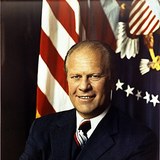
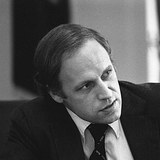
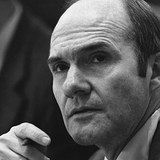
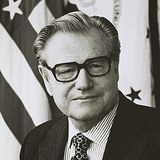
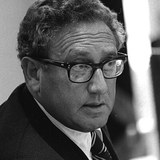
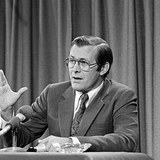
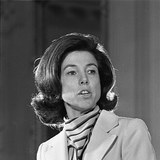
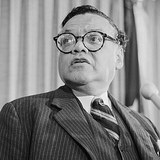
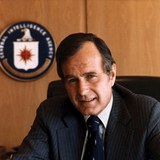
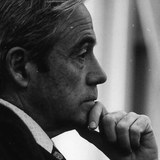
Never elected president or vice president. Richard Nixon named him vice president under the 25th Amendment. The confirmed him 92 to 3 on November 27, 1973, and 387 to 35 on December 6, 1973, the day he was sworn in. He became president when Nixon resigned and took the oath on August 9, 1974. Lost the 1976 election to Jimmy Carter.
AppointmentNov 1975 · appointed by the president · after Donald Rumsfeld left
Term endedJan 20, 1977 · The Ford administration ended on January 20, 1977.
His title was Assistant to the President for White House Operations, which the news media and others called Chief of Staff, the Ford Library says. He had been Rumsfeld's deputy, Deputy Assistant to the President since December 18, 1974, the White House said. Ford said on November 3, 1975 that Cheney would replace Rumsfeld and take over his responsibilities for coordinating the White House staff. The Ford Library dates his time as Assistant to the President from November 1975 to January 1977. No source we checked gives his first day.
Dick Cheney, 1976 · David Hume Kennerly · Public domain · Wikimedia Commons
Donald RumsfeldSep 30, 1974 — Nov 1975appointed
AppointmentSep 30, 1974 · appointed by the president · after Alexander Haig left
Moved to another postNov 1975 · Ford said on November 3, 1975 that he would nominate Rumsfeld as Secretary of Defense. Rumsfeld was sworn in to that post on November 20, 1975.
His title was Assistant to the President, with Cabinet rank and responsibility for the coordination of White House operations, the White House announced on September 24, 1974. Notes of Ford's remarks at the first senior staff meeting Rumsfeld chaired have Ford saying that Rumsfeld would not be called Chief of Staff. The White House had said on September 24, 1974 that he would take up his duties on Friday September 27, 1974. At a White House briefing at 11:59 a.m. on September 30, 1974 Rumsfeld said he had been on the job about 3 hours and 58 minutes and was continuing for a time as Ambassador to NATO. The Ford Library says Cheney succeeded him in November 1975 when he became Secretary of Defense. No source we checked gives his last day.
AppointmentAug 9, 1974 · appointed by the president · from the start of the term
Moved to another postSep 1974 · The White House announced on September 16, 1974 that Ford had appointed him Supreme Allied Commander, Europe, effective December 15, 1974, and Commander of United States Forces in Europe, effective November 1, 1974.
Nixon brought him back to the White House in May 1973 to replace H. R. Haldeman, who had resigned on April 30, 1973, the Nixon Library says. His title was Assistant to the President. The Ford Library says he stayed on as chief of staff under Ford from August 9, 1974 until he left in late September 1974. Press office guidance for the announcement of September 24, 1974 said he would leave that Friday for a short vacation before taking command in Europe. No source we checked gives his last day.
AppointmentAug 15, 1974 · appointed by the president · after Fred Buzhardt left
Term endedJan 20, 1977 · The Ford administration ended on January 20, 1977.
A former law partner of Ford. The White House announced his appointment as Counsel to the President on August 15, 1974, and its biography of December 18, 1974 says he had held the post since that day. The Ford Library says Ford gave the post Cabinet status.
AppointmentAug 9, 1974 · appointed by the president · from the start of the term
ResignationAug 16, 1974 · He resigned as White House Counsel and returned to private law practice in South Carolina, the Nixon Library says.
Nixon named him Special White House Counsel for Watergate Matters on May 10, 1973 and White House Counsel on January 4, 1974. He had a heart attack on June 13, 1974 that kept him from work until a few weeks before Nixon resigned, the Nixon Library says. It dates his resignation August 16, 1974, one week after Ford took office. The White House said in December 1974 that Buchen had been Counsel to the President since August 15, 1974.
AppointmentJul 12, 1976 · appointed by the president · after Margita White left
Term endedJan 20, 1977 · The Ford administration ended on January 20, 1977.
Special Counsel to the President before that. Ford announced his appointment as Director of the White House Office of Communications on July 12, 1976. The Ford Library dates his time as director from July 1976 to January 1977.
AppointmentJun 18, 1975 · appointed by the president · after Gerald Warren left
Moved to another postJul 12, 1976 · Ford announced on July 14, 1976 that he would nominate her to the Federal Communications Commission. The Ford Library says she held the post until her appointment to the commission in July 1976.
Assistant Press Secretary to the President since February 1975. The White House said she was named Director of the Office of Communications on June 18, 1975. Gergen was named to the post on July 12, 1976.
AppointmentDec 2, 1974 · appointed by the president · after Ken Clawson left
DepartureJun 18, 1975
Deputy Press Secretary since 1969. The White House said on December 18, 1974 that he was appointed Deputy Press Secretary for Public Information Liaison on December 2, 1974. The Ford Library says Nessen gave him many of the old Communications Office functions in November 1974, that the name Office of Communications was at first not used, and counts him as a director of the office. The White House said in 1976 that Margita White was named director on June 18, 1975. The Ford Library says she succeeded him when he left the White House in July 1975. No source we checked gives his last day.
AppointmentAug 9, 1974 · appointed by the president · from the start of the term
ResignationNov 7, 1974 · Press Secretary terHorst announced his departure soon after the change of administrations, the Ford Library says. Clawson's letter of October 11, 1974 set his resignation to take effect on November 7, 1974, and Ford accepted it.
He signed his letter as Communications Director to the President. Ford's reply thanked him for his service to former President Nixon. The Ford Library says terHorst spread the functions of the Communications Office among several assistant press secretaries. No source we checked gives the day Nixon appointed him.
AppointmentSep 20, 1974 · appointed by the president · after John Hushen left
Term endedJan 20, 1977 · The Ford administration ended on January 20, 1977.
NBC's White House correspondent before that. The White House announced his appointment as Press Secretary to the President on September 20, 1974. The Ford Library says he held the post from that day through the end of the administration.
AppointmentAug 9, 1974 · appointed by the president · from the start of the term
ResignationSep 8, 1974 · He resigned on September 8, 1974, the day Ford pardoned Richard Nixon. News accounts quoted him as saying that he could not in good conscience support the president's decision, even though he knew Ford had acted in good conscience.
The Ford Library says he was named Press Secretary to the President on August 9, 1974, the day Ford took office, and that it was Ford's first presidential appointment.
AppointmentNov 3, 1975 · appointed by the president · after Henry Kissinger left
Term endedJan 20, 1977 · The Ford administration ended on January 20, 1977.
An Air Force lieutenant general. Deputy Assistant to the President for National Security Affairs since April 6, 1973, the White House said. Ford said on November 3, 1975 that Scowcroft would move up to Assistant to the President for National Security Affairs. The National Security Council history gives his dates as November 3, 1975 to January 20, 1977.
Brent Scowcroft, 1976 · David Hume Kennerly · Public domain · Wikimedia Commons
Henry KissingerAug 9, 1974 — Nov 3, 1975appointed
AppointmentAug 9, 1974 · appointed by the president · from the start of the term
ReplacedNov 3, 1975 · Ford said on November 3, 1975 that Kissinger would give up the post of Assistant to the President to devote his full time to his responsibilities as Secretary of State.
His title was Assistant to the President for National Security Affairs. Nixon named him before taking office, and the National Security Council history dates his service from December 2, 1968. He was also Secretary of State from September 1973, the same history says. It ends his time as National Security Adviser on November 3, 1975.
Feb 10, 1975 — Jan 20, 1977Senate vote Feb 5, 1975
Details
AppointmentFeb 10, 1975 · nominated by the president, confirmed by the Senate on Feb 5, 1975 · after Roy Ash left
Term endedJan 20, 1977 · The Ford administration ended on January 20, 1977.
Secretary of Housing and Urban Development before that. The Senate received the nomination on January 16, 1975, and the Committee on Government Operations voted on January 29, 1975 to report it favorably. The Senate confirmed him on February 5, 1975 together with two other nominations. The Congressional Record Daily Digest gives no vote count for them, and the three roll calls that day were on food stamps. Ford spoke at his swearing-in in the Cabinet Room on February 10, 1975. The OMB list of former directors starts his term on February 10, 1975.
AppointmentAug 9, 1974 · appointed by the president · from the start of the term
ResignationFeb 3, 1975 · Ash wrote to Ford on December 10, 1974 that he had intended to serve two years in government and that those two years were completed that day. Ford accepted the resignation on December 17, 1974, effective on a date to be determined.
His title was Assistant to the President and Director of the Office of Management and Budget. Nixon appointed him, and the OMB list of former directors gives his dates as February 2, 1973 to February 3, 1975. A law of March 2, 1974 required Senate consent for the director only from the time the person then in office left it.
Dec 19, 1974 — Jan 20, 1977Senate vote Dec 10, 1974
Details
AppointmentDec 19, 1974 · nominated by the president, confirmed by the Senate on Dec 10, 1974 · the post had been vacant
Term endedJan 20, 1977 · The Ford administration ended on January 20, 1977.
Former Governor of New York. President Ford nominated him on August 20, 1974 under the 25th Amendment, which needs a vote of both houses of Congress. The Senate confirmed him 90 to 7 on December 10, 1974 and the House 287 to 128 on December 19, 1974. He was sworn in on December 19, 1974, the inaugural committee's chronology says.
Nelson Rockefeller, 1975 · The White House · Public domain · Wikimedia Commons
VacantAug 9, 1974 — Dec 19, 1974
Gerald Ford was sworn in as President on August 9, 1974 after Richard Nixon resigned, the Congressional Research Service says. President Ford nominated Nelson Rockefeller to be Vice President on August 20, 1974. On the day the House confirmed Rockefeller, President Ford said Congress had filled the constitutional office of the Vice President.
AppointmentAug 9, 1974 · nominated by the president, confirmed by the Senate · from the start of the term
Term endedJan 20, 1977 · The Ford administration ended on January 20, 1977.
President Nixon appointed him Secretary of State on September 21, 1973, the Office of the Historian says. It gives September 22, 1973 as his entry on duty and January 20, 1977 as the end of his appointment. He was also National Security Adviser until November 3, 1975, when President Ford removed him from that post and kept him as Secretary of State, the Office of the Historian says.
Henry Kissinger, 1976 · David Hume Kennerly · Public domain · Wikimedia Commons
Deputy Secretary of State
Charles RobinsonSenate-confirmed
Apr 9, 1976 — Jan 20, 1977Senate vote Apr 7, 1976
Details
AppointmentApr 9, 1976 · nominated by the president, confirmed by the Senate on Apr 7, 1976 · after Robert Ingersoll left
Term endedJan 20, 1977 · The Ford administration ended on January 20, 1977.
Under Secretary of State for Economic Affairs since December 9, 1974, the White House said when it announced the nomination on March 31, 1976. The Senate confirmed him on April 7, 1976 with other nominations and no roll call, the Congressional Record Daily Digest shows. The Office of the Historian gives April 7, 1976 as his appointment, April 9, 1976 as his entry on duty and January 20, 1977 as the end of his appointment.
Robert IngersollAug 9, 1974 — Mar 31, 1976Senate-confirmed
AppointmentAug 9, 1974 · nominated by the president, confirmed by the Senate · from the start of the term
ResignationMar 31, 1976 · The White House said on March 29, 1976 that President Ford had accepted his resignation effective March 31, 1976. It gave no reason.
Appointed on June 30, 1974 under President Nixon, the White House said. The Office of the Historian gives July 10, 1974 as his entry on duty and March 31, 1976 as the end of his appointment.
AppointmentAug 9, 1974 · nominated by the president, confirmed by the Senate · from the start of the term
Term endedJan 20, 1977 · The Ford administration ended on January 20, 1977.
In the post since May 8, 1974 under President Nixon, the Treasury says. It lists his service from May 8, 1974 to August 9, 1974 under President Nixon and from August 9, 1974 to January 20, 1977 under President Ford. A Treasury biography of June 1975 says President Ford asked him in August 1974 to continue in the post.
Nov 20, 1975 — Jan 20, 1977Senate vote Nov 18, 1975
Details
AppointmentNov 20, 1975 · nominated by the president, confirmed by the Senate on Nov 18, 1975 · after James Schlesinger left
Term endedJan 20, 1977 · The Ford administration ended on January 20, 1977.
Assistant to the President before he took the post. President Ford announced the nomination on November 3, 1975 and spoke at his swearing-in on November 20, 1975. The Defense Department's Historical Office dates his service from November 20, 1975 to January 20, 1977.
Donald Rumsfeld, 1976 · Robert D. Ward · Public domain · Wikimedia Commons
James SchlesingerAug 9, 1974 — Nov 19, 1975Senate-confirmed
AppointmentAug 9, 1974 · nominated by the president, confirmed by the Senate · from the start of the term
DismissalNov 19, 1975 · President Ford dismissed him on November 2, 1975, the Defense Department's Historical Office says. Ford said on November 3, 1975 that he wanted a change in the Defense Department and a team that was his team.
President Nixon nominated him on May 10, 1973. The Senate confirmed him on June 28, 1973 and he was sworn in on July 2, 1973, a biography of 1974 in the Ford Library says. The Defense Department's Historical Office dates his service from July 2, 1973 to November 19, 1975.
AppointmentAug 9, 1974 · nominated by the president, confirmed by the Senate · from the start of the term
Term endedJan 20, 1977 · The Ford administration ended on January 20, 1977.
In the post since January 30, 1973 under President Nixon. The Defense Department's Historical Office dates his service from January 30, 1973 to January 20, 1977.
William Clements, 1974 · Thomas J. O'Halloran · Public domain · Wikimedia Commons
Edward LeviSenate-confirmed
Feb 6, 1975 — Jan 20, 1977Senate vote Feb 5, 1975
Details
AppointmentFeb 6, 1975 · nominated by the president, confirmed by the Senate on Feb 5, 1975 · after Laurence Silberman left
Term endedJan 20, 1977 · The Ford administration ended on January 20, 1977.
President of the University of Chicago before he took the post. A White House background paper says the Senate confirmed him by voice vote on February 5, 1975. The United States Reports record that he was commissioned and took the oath on February 6, 1975, and the Justice Department dates his appointment that day. A Justice Department release of February 7, 1975 says he took the oath at a ceremony that day, where President Ford spoke. The Justice Department says he resigned on January 20, 1977.
AppointmentFeb 1975 · acting · after William Saxbe left
HandoverFeb 6, 1975 · Edward Levi took office.
Deputy Attorney General from March 1974 to April 1975, the Justice Department says. Saxbe's resignation took effect on February 3, 1975, the United States Reports record. No source found gives the first day of his acting service. President Ford addressed him as Acting Attorney General at Levi's swearing-in ceremony on February 7, 1975.
William SaxbeAug 9, 1974 — Feb 3, 1975Senate-confirmed
AppointmentAug 9, 1974 · nominated by the president, confirmed by the Senate · from the start of the term
Moved to another postFeb 3, 1975 · President Ford announced on December 13, 1974 that he would nominate Saxbe as Ambassador to India. Saxbe resigned effective on his appointment as ambassador, and the State Department dates that appointment February 3, 1975.
President Nixon appointed him on January 4, 1974, the Justice Department says. It says he served under President Ford until February 1, 1975. The United States Reports record that he resigned effective February 3, 1975.
Oct 17, 1975 — Jan 20, 1977Senate vote Oct 9, 1975
Details
AppointmentOct 17, 1975 · nominated by the president, confirmed by the Senate on Oct 9, 1975 · after Kent Frizzell left
Term endedJan 20, 1977 · The Ford administration ended on January 20, 1977.
Administrator of the Small Business Administration before he took the post, the White House said when it announced the nomination on September 9, 1975. The Senate confirmed him on October 9, 1975 with other nominations and no roll call, the Congressional Record Daily Digest shows. The Interior Department lists him as taking office on October 17, 1975, the day President Ford spoke at his swearing-in.
Solicitor of the Interior, the White House said in October 1975. Interior Department releases name him Acting Secretary of the Interior from August 21, 1975 to October 8, 1975. A Ford Library briefing paper for a meeting on August 28, 1975 also calls him Acting Secretary of Interior. President Ford had accepted Stanley Hathaway's resignation on July 25, 1975, effective upon the appointment and qualification of his successor. No opened source gives the first or the last day of this acting service.
Stanley HathawayJun 13, 1975 — Oct 9, 1975Senate-confirmed
AppointmentJun 13, 1975 · nominated by the president, confirmed by the Senate on Jun 11, 1975 · after Kent Frizzell left
ResignationOct 9, 1975 · President Ford accepted his resignation on July 25, 1975, effective upon the appointment and qualification of his successor. Ford wrote that he understood the health considerations that had prompted the decision.
Former Governor of Wyoming. An Interior Department release of June 13, 1975 says he was sworn in that day. President Ford spoke at the ceremony and Associate Justice Rehnquist gave the oath. The Interior Department's list of secretaries gives June 12, 1975 as the day he took office and October 9, 1975 as his termination. Interior releases from August 21, 1975 to October 8, 1975 name Kent Frizzell as Acting Secretary.
AppointmentMay 1975 · acting · after Rogers Morton left
HandoverJun 13, 1975 · Stanley Hathaway took office.
Solicitor of the Interior since April 1973, the White House said in October 1975. An Interior Department release of May 8, 1975 names him Acting Secretary of the Interior. That is the first record found. The first day of his acting service is not on record.
AppointmentAug 9, 1974 · nominated by the president, confirmed by the Senate · from the start of the term
Moved to another postApr 30, 1975 · President Ford named him Secretary of Commerce on March 27, 1975, the Commerce Department said.
President Nixon nominated him on January 25, 1971 and he took office on January 29, 1971, the Interior Department says. It lists his termination as April 30, 1975.
AppointmentNov 4, 1976 · recess appointment by the president
Term endedJan 20, 1977 · The Ford administration ended on January 20, 1977.
The White House announced the recess appointment on November 4, 1976. It said he had been Under Secretary and Deputy Secretary of Agriculture since December 1975. The Agriculture Department says he served until January 20, 1977.
AppointmentOct 4, 1976 · acting · after Earl Butz left
Permanent appointmentNov 4, 1976 · President Ford gave him a recess appointment as Secretary of Agriculture on November 4, 1976.
Under Secretary of Agriculture. UPI reported on October 4, 1976 that Knebel said President Ford had asked him to serve as Acting Secretary. A White House memo of October 6, 1976 says that when Butz resigned the Under Secretary automatically became the Acting Secretary. A memo of October 16, 1976 calls him the Acting Secretary.
Earl ButzAug 9, 1974 — Oct 4, 1976Senate-confirmed
AppointmentAug 9, 1974 · nominated by the president, confirmed by the Senate · from the start of the term
ResignationOct 4, 1976 · Butz wrote to President Ford on October 4, 1976 that he apologized for any offense caused by language he used in a recent conversation that was reported publicly. In a statement he called his resignation the price he paid for a gross indiscretion in a private conversation. Ford said that day that he had accepted the resignation.
Appointed on December 2, 1971, the Agriculture Department says. A UPI report of October 4, 1976 says President Nixon appointed him in 1971. The Agriculture Department says he served until October 4, 1976.
Feb 2, 1976 — Jan 20, 1977Senate vote Dec 11, 1975
Details
AppointmentFeb 2, 1976 · nominated by the president, confirmed by the Senate on Dec 11, 1975 · after Rogers Morton left
Term endedJan 20, 1977 · The Ford administration ended on January 20, 1977.
Ambassador to Great Britain before he took the post. President Ford announced the nomination on November 3, 1975. The Senate confirmed him on December 11, 1975 with other nominations and no roll call, the Congressional Record Daily Digest shows. President Ford spoke at his swearing-in on February 2, 1976. The Commerce Department lists his service from February 2, 1976 to January 20, 1977.
Rogers MortonMay 1, 1975 — Feb 2, 1976Senate-confirmed
AppointmentMay 1, 1975 · nominated by the president, confirmed by the Senate on Apr 25, 1975 · after John Tabor left
ResignationFeb 2, 1976 · President Ford said on November 3, 1975 that Morton had told him he would like to reduce the pace of his activities after the first of the year and resign to return to the private sector.
Secretary of the Interior before he took the post. The Senate confirmed him on April 25, 1975 with other nominations and no roll call, the Congressional Record Daily Digest shows. President Ford spoke at his swearing-in on May 1, 1975. The Commerce Department lists his service from May 1, 1975 to February 2, 1976.
AppointmentApr 1975 · acting · after Frederick B. Dent left
HandoverMay 1, 1975 · Rogers Morton took office.
Under Secretary of Commerce, the White House said in July 1975. A Commerce Department release of April 25, 1975 names him Acting Secretary of Commerce. That is the first record found. The first day of his acting service is not on record.
Feb 10, 1976 — Jan 20, 1977Senate vote Feb 4, 1976
Details
AppointmentFeb 10, 1976 · nominated by the president, confirmed by the Senate on Feb 4, 1976 · after John T. Dunlop left
Term endedJan 20, 1977 · The Ford administration ended on January 20, 1977.
Previously Director of the Federal Mediation and Conciliation Service and the President's special assistant for labor-management negotiations, President Ford said at his swearing-in on February 10, 1976. President Ford announced his choice on January 22, 1976. The Labor Department lists his tenure as February 10, 1976 to January 20, 1977.
John T. DunlopMar 18, 1975 — Jan 31, 1976Senate-confirmed
AppointmentMar 18, 1975 · nominated by the president, confirmed by the Senate on Mar 6, 1975 · after Peter J. Brennan left
ResignationJan 31, 1976 · In a statement on January 14, 1976 he said that after talks with labor and management leaders since December 22, 1975 he had concluded that "the requisite communications, confidence and trust, is no longer possible, at least with me in the post of Secretary of Labor." The Labor Department says he resigned over the administration veto of a labor relations bill. President Ford accepted his resignation on January 14, 1976.
Harvard University economics professor, the Labor Department says. The Senate confirmed him on March 6, 1975 with no recorded vote, the Congressional Record Daily Digest shows. President Ford spoke at his swearing-in on March 18, 1975. The Labor Department lists his tenure as March 18, 1975 to January 31, 1976.
Peter J. BrennanAug 9, 1974 — Mar 15, 1975Senate-confirmed
AppointmentAug 9, 1974 · nominated by the president, confirmed by the Senate · from the start of the term
ResignationMar 15, 1975 · In his letter to President Ford he wrote that he had "decided that it is in my own best interest and that of my family to return to the private sector." President Ford accepted his resignation on February 7, 1975, effective on or about March 15, 1975 as he had asked.
Appointed by President Nixon. The Labor Department lists his tenure as February 2, 1973 to March 15, 1975.
Aug 8, 1975 — Jan 20, 1977Senate vote Jul 22, 1975
The department became the Department of Health and Human Services on May 4, 1980.
Details
AppointmentAug 8, 1975 · nominated by the president, confirmed by the Senate on Jul 22, 1975 · after Caspar Weinberger left
Term endedJan 20, 1977 · The Ford administration ended on January 20, 1977.
President of the University of Alabama since 1969, President Ford said at his swearing-in on August 8, 1975. The Senate confirmed him on July 22, 1975 with no recorded vote, the Congressional Record Daily Digest shows. The archived HHS list gives his tenure as August 8, 1975 to January 20, 1977.
Caspar WeinbergerAug 9, 1974 — Aug 8, 1975Senate-confirmed
AppointmentAug 9, 1974 · nominated by the president, confirmed by the Senate · from the start of the term
ResignationAug 8, 1975 · In his letter of June 23, 1975 he wrote that "for the reasons with which you are familiar it is not possible for me to remain in Washington" until the end of the term. President Ford accepted his resignation on June 26, 1975 and wrote that he understood the personal considerations behind it.
Secretary since February 12, 1973, under President Nixon, an archived HHS list shows. It ends his tenure on August 8, 1975, the day his successor was sworn in. His letter set his resignation effective August 10, 1975.
Mar 10, 1975 — Jan 20, 1977Senate vote Mar 5, 1975
Details
AppointmentMar 10, 1975 · nominated by the president, confirmed by the Senate on Mar 5, 1975 · after James T. Lynn left
Term endedJan 20, 1977 · The Ford administration ended on January 20, 1977.
Previously Assistant Attorney General for the Civil Division at the Justice Department, the HUD Newsletter says. Justice Byron White gave her the oath on March 10, 1975, with President Ford present. HUD lists her tenure as March 10, 1975 to January 20, 1977.
Carla Anderson Hills, 1975 · Unknown author · Public domain · Wikimedia Commons
James T. LynnAug 9, 1974 — Feb 5, 1975Senate-confirmed
AppointmentAug 9, 1974 · nominated by the president, confirmed by the Senate · from the start of the term
Moved to another postFeb 5, 1975 · He became Director of the Office of Management and Budget. The Senate confirmed him to that post on February 5, 1975 and President Ford spoke at his swearing-in on February 10, 1975.
Secretary since February 2, 1973, under President Nixon. HUD lists his tenure as February 2, 1973 to February 5, 1975.
AppointmentMar 7, 1975 · nominated by the president, confirmed by the Senate on Mar 3, 1975 · after John W. Barnum left
Term endedJan 20, 1977 · The Ford administration ended on January 20, 1977.
The Senate confirmed him on March 3, 1975 with no recorded vote, the Congressional Record Daily Digest shows. President Ford spoke at his swearing-in on March 7, 1975. The Transportation Department lists his tenure as March 7, 1975 to January 20, 1977.
William T. Coleman Jr., 1976 · Marion S. Trikosko · Public domain · Wikimedia Commons
John W. BarnumFeb 1975 — Mar 7, 1975acting
AppointmentFeb 1975 · acting · after Claude Brinegar left
HandoverMar 7, 1975 · William T. Coleman Jr. took office as Secretary of Transportation on March 7, 1975.
Deputy Secretary of Transportation. The Transportation Department lists him as acting secretary between Brinegar and Coleman without dates. Department press releases call him Acting Secretary from February 3, 1975 to March 6, 1975. The day his acting role began was not found.
Claude BrinegarAug 9, 1974 — Feb 1, 1975Senate-confirmed
AppointmentAug 9, 1974 · nominated by the president, confirmed by the Senate · from the start of the term
ResignationFeb 1, 1975 · In his letter of December 17, 1974 he wrote: "But now it is necessary for me to return to the private sector." President Ford accepted his resignation on December 18, 1974, effective February 1, 1975 as he had asked.
Secretary since February 2, 1973, under President Nixon. The Transportation Department lists his tenure as February 2, 1973 to February 1, 1975.
Oct 12, 1974 — Jan 20, 1977Senate vote Oct 1, 1974
Head of the Veterans Administration. It became the Department of Veterans Affairs on March 15, 1989.
Details
AppointmentOct 12, 1974 · nominated by the president, confirmed by the Senate on Oct 1, 1974
Former Representative from Indiana and Deputy Administrator of Veterans Affairs since January 1974. President Ford announced on August 19, 1974 that he would nominate him to succeed Donald E. Johnson, who had resigned. The Senate confirmed him on October 1, 1974 with no recorded vote, the Congressional Record Daily Digest shows. President Ford spoke at his swearing-in on October 12, 1974. There Roudebush said he had been acting Administrator only a very short time. He signed Veterans Administration notices as Administrator dated up to February 25, 1977, the Federal Register shows. Remained in the post after January 20, 1977.
Permanent appointmentOct 12, 1974 · Roudebush was sworn in as Administrator on October 12, 1974.
Deputy Administrator of Veterans Affairs since January 1974, the White House said. He signed a Veterans Administration notice dated September 23, 1974 as Acting Administrator, the Federal Register shows. That is the first record found. At his swearing-in on October 12, 1974 he said he had been acting Administrator only a very short time. The first day of his acting service is not on record.
Jan 30, 1976 — Jan 20, 1977Senate vote Jan 27, 1976
The Director of Central Intelligence headed the CIA and the whole intelligence community. The title became Director of the Central Intelligence Agency in 2005, a CIA history shows.
Details
AppointmentJan 30, 1976 · nominated by the president, confirmed by the Senate on Jan 27, 1976 · after William Colby left
Term endedJan 20, 1977 · The Ford administration ended on January 20, 1977.
Previously the U.S. representative to the People's Republic of China, President Ford said when he announced the nomination on November 3, 1975. One senator voted present in the confirmation vote, the Congressional Record Daily Digest shows. President Ford spoke at his swearing-in on January 30, 1976. A CIA history gives his tenure as January 30, 1976 to January 20, 1977.
George H. W. Bush, 1976 · Central Intelligence Agency · Public domain · Wikimedia Commons
William ColbyAug 9, 1974 — Jan 30, 1976Senate-confirmed
AppointmentAug 9, 1974 · nominated by the president, confirmed by the Senate · from the start of the term
ReplacedJan 30, 1976 · President Ford announced on November 3, 1975 that he would nominate George Bush to the post. Asked why Schlesinger and Colby did not fit his new team, he said any President has to have his own team in foreign policy. A CIA history says Colby lost the President's confidence and was fired. He stayed until his successor was sworn in.
President Nixon nominated him in May 1973, a CIA history says. It gives his tenure as September 4, 1973 to January 30, 1976.
Mar 26, 1975 — Jan 20, 1977Senate vote Mar 19, 1975
In 1980 the post was renamed United States Trade Representative.
Details
AppointmentMar 26, 1975 · nominated by the president, confirmed by the Senate on Mar 19, 1975 · after William D. Eberle left
Term endedJan 20, 1977 · The Ford administration ended on January 20, 1977.
Previously Secretary of Commerce. The Senate confirmed him on March 19, 1975 with no recorded vote, the Congressional Record Daily Digest shows. President Ford spoke at his swearing-in on March 26, 1975. The State Department records his appointment and entry on duty on March 26, 1975 and the end of his appointment on January 20, 1977.
William D. EberleAug 9, 1974 — Dec 24, 1974Senate-confirmed
AppointmentAug 9, 1974 · nominated by the president, confirmed by the Senate · from the start of the term
ResignationDec 24, 1974 · In his letter of December 17, 1974 he wrote: "It is my personal desire to return to the private sector after more than three years of Government service." President Ford accepted his resignation on December 24, 1974.
Appointed under President Nixon. The State Department records his appointment on November 5, 1971, his entry on duty on November 12, 1971 and the end of his appointment on December 24, 1974.
Mar 15, 1976 — Jan 19, 1977Senate vote Mar 3, 1976
Details
AppointmentMar 15, 1976 · nominated by the president, confirmed by the Senate on Mar 3, 1976 · after Daniel Patrick Moynihan left
DepartureJan 19, 1977 · The State Department records the end of his mission on January 19, 1977, the day before the Ford administration ended.
President Ford announced his choice on February 25, 1976. The Senate confirmed him on March 3, 1976 with no recorded vote, the Congressional Record Daily Digest shows. Justice Potter Stewart gave him the oath on March 15, 1976, with President Ford present. The State Department records his appointment and the presentation of his credentials on March 15, 1976 and the end of his mission on January 19, 1977.
William Scranton, 1976 · US Government · Public domain · Wikimedia Commons
Daniel Patrick MoynihanJun 30, 1975 — Feb 2, 1976Senate-confirmed
AppointmentJun 30, 1975 · nominated by the president, confirmed by the Senate on Jun 9, 1975 · after John Scali left
ResignationFeb 2, 1976 · In his letter of January 31, 1976 he wrote that his leave from the university was ending: "It is time to return to teaching and such are the conditions of my tenure that I return now or not at all." President Ford accepted his resignation on February 2, 1976.
Previously Ambassador to India and a professor at Harvard University, the White House said. The Senate confirmed him on June 9, 1975 with no recorded vote, the Congressional Record Daily Digest shows. President Ford spoke at his swearing-in on June 30, 1975. The State Department records his appointment on June 10, 1975, the presentation of his credentials on June 30, 1975 and the end of his mission on February 2, 1976.
John ScaliAug 9, 1974 — Jun 29, 1975Senate-confirmed
AppointmentAug 9, 1974 · nominated by the president, confirmed by the Senate · from the start of the term
DepartureJun 29, 1975
Appointed under President Nixon. The State Department records his appointment on February 2, 1973, the presentation of his credentials on February 20, 1973 and the end of his mission on June 29, 1975. The White House announced on May 21, 1975 that Daniel Patrick Moynihan would succeed him.
Feb 12, 1976 — Jan 20, 1977Senate vote Feb 6, 1976
Small Business Administration.
Details
AppointmentFeb 12, 1976 · nominated by the president, confirmed by the Senate on Feb 6, 1976 · after Louis F. Laun left
The Senate confirmed him on February 6, 1976 with no recorded vote, the Congressional Record Daily Digest shows. President Ford spoke at his swearing-in on February 12, 1976. The SBA list of administrators gives his tenure as February 12, 1976 to March 4, 1977. Remained in the post after January 20, 1977.
AppointmentNov 1975 · acting · after Thomas S. Kleppe left
HandoverFeb 12, 1976 · Mitchell Kobelinski took office as SBA Administrator on February 12, 1976.
He signed SBA documents as Acting Administrator dated from November 4, 1975 to December 24, 1975, the Federal Register shows, and testified to a Senate committee as Acting Administrator on November 11, 1975, the Congressional Record Daily Digest shows. Daniel T. Kingsley signed two SBA notices as Acting Administrator dated December 17, 1975. The days the acting role began and ended were not found. Deputy Administrator in 1976, the Daily Digest shows.
Thomas S. KleppeAug 9, 1974 — Oct 1975Senate-confirmed
AppointmentAug 9, 1974 · nominated by the president, confirmed by the Senate · from the start of the term
Moved to another postOct 1975 · He became Secretary of the Interior. The Senate confirmed him to that post on October 9, 1975 and he was sworn in at the White House on October 17, 1975.
Administrator since January 18, 1971, held over from the Nixon administration, the SBA list of administrators shows. It ends his tenure on October 12, 1975, but he signed SBA notices as Administrator dated up to October 16, 1975, the Federal Register shows. The day he left the SBA was not found.
AppointmentAug 9, 1974 · nominated by the president, confirmed by the Senate · from the start of the term
Holdover. Nominated by President Nixon on June 7, 1973, confirmed by the Senate on June 27, 1973 and sworn in as director on July 9, 1973, the FBI says. The FBI dates his service to February 15, 1978. Remained in the post after January 20, 1977.
Feb 23, 1976 — Jan 20, 1977Senate vote Feb 5, 1976
Details
AppointmentFeb 23, 1976 · nominated by the president, confirmed by the Senate on Feb 5, 1976
Chief of the crime victims division of the Illinois attorney general's office since 1974 and director of the Illinois Department of Corrections from 1970 to 1973, the White House said. Confirmed without a roll call on February 5, 1976, the Congressional Record shows. Sworn in on February 23, 1976, the DEA says. He stepped down on July 10, 1981. Remained in the post after January 20, 1977.
AppointmentMay 30, 1975 · acting · after John Bartels left
HandoverJan 23, 1976 · Dogin became deputy commissioner of the New York State Division of Criminal Justice Services, the DEA says. Peter Bensinger became acting administrator the same day.
Deputy assistant attorney general in the Criminal Division. Attorney General Edward Levi appointed him acting administrator on May 30, 1975, the DEA says. This is before June 5, 1975, the day the White House gave for Bartels's resignation to take effect. He served until January 23, 1976, the DEA says.
John BartelsAug 9, 1974 — Jun 5, 1975Senate-confirmed
AppointmentAug 9, 1974 · nominated by the president, confirmed by the Senate · from the start of the term
ResignationJun 5, 1975 · President Ford accepted Bartels's resignation effective June 5, 1975, the White House said on June 9, 1975.
Holdover. The DEA's first administrator. The White House selected him on September 12, 1973 and the Senate confirmed him on October 4, 1973, the DEA says. A White House statement of June 9, 1975 gave June 5, 1975 as the day the resignation took effect. A later White House statement, of December 9, 1975, said he resigned effective June 9, 1975. The DEA says the attorney general appointed an acting administrator on May 30, 1975 following his resignation.
Bureau of Alcohol, Tobacco and Firearms, then part of the Treasury.
Details
AppointmentAug 9, 1974 · appointed by the president · from the start of the term
Holdover. ATF lists him as director from 1972 to 1978. The director is appointed by the Secretary of the Treasury, ATF says. Remained in the post after January 20, 1977.
AppointmentMay 23, 1976 · appointed by the president · after Wayne Colburn left
The Marshals Service lists him as director from May 23, 1976. It dates the next director, Stanley Morris, from October 23, 1983. Remained in the post after January 20, 1977.
AppointmentAug 9, 1974 · appointed by the president · from the start of the term
ResignationMay 1976 · Colburn retired, the Marshals Service says.
Holdover. A former U.S. marshal for the Southern District of California, selected as director by the attorney general in 1970, the Marshals Service says. It dates his service from January 1970 to May 1976. The day he left is not on record.
AppointmentApr 1975 · nominated by the president, confirmed by the Senate on Mar 21, 1975 · after Laurence Silberman left
DepartureJan 1977
Federal district judge in New York since 1962, the White House said when President Ford announced the nomination on March 12, 1975. Confirmed without a roll call on March 21, 1975, the Congressional Record shows. His service as a judge ended on April 6, 1975, the Federal Judicial Center says. The Justice Department says he served from April 1975 to January 1977. The days he took office and left are not on record.
AppointmentAug 9, 1974 · nominated by the president, confirmed by the Senate · from the start of the term
ResignationApr 1975 · President Ford accepted Silberman's resignation on March 12, 1975, effective when his successor took office.
Holdover. Deputy attorney general from March 1974 to April 1975, the Justice Department says. The Senate received his nomination as ambassador to Yugoslavia on April 18, 1975, the Congressional Record shows. The day he left is not on record.
AppointmentAug 9, 1974 · appointed by the president · from the start of the term
Holdover. Appointed as the 15th director on November 7, 1973, the Secret Service says. He retired as director on November 30, 1981. Remained in the post after January 20, 1977.
AppointmentAug 9, 1974 · nominated by the president, confirmed by the Senate · from the start of the term
Holdover. Air Force general, chairman from July 2, 1974 to June 20, 1978, the Defense Department's list of key officials shows. The Senate confirmed his reappointment as chairman 57 to 34 on July 1, 1976. Remained in the post after January 20, 1977.
George Brown, 1975 · Unknown author · Public domain · Wikimedia Commons
Secretary of the Army
Martin HoffmannSenate-confirmed
Aug 5, 1975 — Jan 20, 1977Senate vote Aug 1, 1975
Details
AppointmentAug 5, 1975 · nominated by the president, confirmed by the Senate on Aug 1, 1975 · after Norman Augustine left
General counsel of the Defense Department since March 1974, the White House said when President Ford announced the nomination on July 22, 1975. Confirmed without a roll call on August 1, 1975, the Congressional Record shows. Secretary from August 5, 1975 to February 13, 1977, the Army's Center of Military History and the Defense Department's list of key officials show. Remained in the post after January 20, 1977.
AppointmentJul 3, 1975 · acting · after Howard Callaway left
HandoverAug 5, 1975 · Martin Hoffmann took office as secretary.
Under secretary of the Army. The Senate confirmed him to that post on May 22, 1975, the Congressional Record shows. The Army's Center of Military History says he was acting secretary from July 3, 1975 to August 5, 1975, between Callaway's departure and Hoffmann's arrival.
Howard CallawayAug 9, 1974 — Jul 3, 1975Senate-confirmed
AppointmentAug 9, 1974 · nominated by the president, confirmed by the Senate · from the start of the term
ResignationJul 3, 1975 · Callaway resigned to become manager of President Ford's 1976 election campaign, the Army's Center of Military History says. The resignation took effect on July 3, 1975, the White House said.
Holdover. Secretary of the Army from May 15, 1973 to July 3, 1975, the Army's Center of Military History and the Defense Department's list of key officials show.
AppointmentAug 9, 1974 · nominated by the president, confirmed by the Senate · from the start of the term
ResignationJan 20, 1977 · Middendorf resigned, the White House said when it sent his successor's nomination to the Senate on February 7, 1977.
Holdover. The Senate received his nomination on May 15, 1974 and confirmed it without a roll call on June 6, 1974, the Congressional Record shows. The Defense Department's list of key officials dates his service from June 10, 1974 to January 20, 1977. The Naval History and Heritage Command gives April 8, 1974 to January 20, 1977.
Jan 2, 1976 — Jan 20, 1977Senate vote Dec 19, 1975
Details
AppointmentJan 2, 1976 · nominated by the president, confirmed by the Senate on Dec 19, 1975 · after James Plummer left
Director of telecommunications and command and control systems in the Office of the Secretary of Defense from 1974 to 1976, the Defense Department's list of key officials says. The Senate received the nomination on December 8, 1975 and confirmed it without a roll call on December 19, 1975, the Congressional Record shows. Secretary from January 2, 1976 to April 6, 1977, the Defense Department's list and Air & Space Forces Magazine show. Remained in the post after January 20, 1977.
AppointmentNov 23, 1975 · acting · after John McLucas left
HandoverJan 2, 1976 · Thomas Reed took office as secretary.
The Congressional Record lists him as under secretary of the Air Force at Senate hearings on May 1, 1975 and November 10, 1975. Air & Space Forces Magazine lists him as acting secretary from November 23, 1975 to January 2, 1976.
John McLucasAug 9, 1974 — Nov 23, 1975Senate-confirmed
AppointmentAug 9, 1974 · nominated by the president, confirmed by the Senate · from the start of the term
Moved to another postNov 23, 1975 · McLucas became administrator of the Federal Aviation Administration. The Senate confirmed him for that post on November 13, 1975, the Congressional Record shows.
Holdover. Air & Space Forces Magazine lists him as secretary from May 15, 1973 to November 23, 1975, acting until July 18, 1973. The Defense Department's list of key officials dates his service from July 19, 1973 to November 12, 1975. The Ford Library holds President Ford's remarks for his swearing-in as FAA administrator on November 24, 1975.
Head of the Immigration and Naturalization Service, part of the Justice Department.
Details
AppointmentAug 9, 1974 · nominated by the president, confirmed by the Senate · from the start of the term
Holdover. A former commandant of the Marine Corps, nominated by President Nixon. He took the oath of office on November 29, 1973, USCIS says. USCIS dates his service to May 12, 1977. Remained in the post after January 20, 1977.
Head of the U.S. Customs Service, part of the Treasury.
Details
AppointmentAug 9, 1974 · appointed by the president · from the start of the term
Holdover. A career federal employee and former assistant commissioner of the Internal Revenue Service. A Customs Service history of 1987 dates his service as commissioner from 1972 to 1977. Remained in the post after January 20, 1977.
AppointmentAug 9, 1974 · acting · from the start of the term
Holdover. The National Library of Medicine lists him as acting Surgeon General from 1973 to 1977. The Office of the Public Health Service Historian says no Surgeon General was in office from January 20, 1973, to July 13, 1977, and that officers of the Commissioned Corps acted in the post. The Spokesman-Review wrote in its obituary of 2005 that he was acting surgeon general for four years under Presidents Nixon, Ford and Carter. Remained in the post after January 20, 1977.
AppointmentJul 1, 1975 · nominated by the president, confirmed by the Senate on May 8, 1975 · after Ronald Lamont-Havers left
President of the Institute of Medicine before, the White House said. President Ford announced on April 21, 1975, that he would nominate him. Confirmed with no roll call, the Congressional Record shows. NIH lists him as director from July 1, 1975. Remained in the post after January 20, 1977.
Donald Fredrickson, 1976 · NIH History Office · Public domain · Wikimedia Commons
Ronald Lamont-HaversFeb 1, 1975 — Jul 1, 1975acting
AppointmentFeb 1, 1975 · acting · after Robert Stone left
HandoverJul 1, 1975 · Donald Fredrickson took office.
Deputy director of NIH since August 4, 1974, NIH says. NIH lists him as acting director from February 1 to June 30, 1975. The Congressional Record names him acting director of NIH at hearings in March and April 1975.
AppointmentDec 1, 1976 · acting · after Alexander Schmidt left
Deputy commissioner of the FDA, the FDA says. The FDA list of acting commissioners gives December 1, 1976, to April 3, 1977. Remained in the post after January 20, 1977.
Alexander SchmidtAug 9, 1974 — Nov 30, 1976appointed
AppointmentAug 9, 1974 · appointed by the president · from the start of the term
Moved to another postNov 30, 1976 · He left the FDA in November 1976 and returned to Illinois as vice chancellor for health affairs, the FDA says.
A holdover. HEW Secretary Caspar Weinberger appointed him in July 1973, the FDA says. The FDA lists his service as July 20, 1973, to November 30, 1976.
Oct 28, 1975 — Jan 20, 1977Senate vote Oct 9, 1975
Details
AppointmentOct 28, 1975 · nominated by the president, confirmed by the Senate on Oct 9, 1975 · after Ray Garrett Jr. left
Confirmed as a commissioner with no roll call, the Congressional Record shows. Counsel to the President before, the White House said. President Ford said on October 2, 1975, that he would designate him chairman upon confirmation. The SEC lists him as chairman from October 28, 1975. Remained in the post after January 20, 1977.
Ray Garrett Jr.Aug 9, 1974 — Oct 28, 1975Senate-confirmed
AppointmentAug 9, 1974 · nominated by the president, confirmed by the Senate · from the start of the term
ResignationOct 28, 1975 · He resigned as chairman and member of the commission to return to private life, his letter of September 17, 1975, says. President Ford accepted the resignation on September 19, 1975.
A holdover. The SEC lists him as chairman from August 6, 1973, to October 28, 1975.
Mar 25, 1976 — Jan 20, 1977Senate vote Mar 18, 1976
Details
AppointmentMar 25, 1976 · nominated by the president, confirmed by the Senate on Mar 18, 1976 · after Paul Rand Dixon left
Confirmed as a commissioner with no roll call, the Congressional Record shows. General Counsel of the FTC from July 1973 to April 1975, the White House said. President Ford said on February 21, 1976, that he intended to designate him chairman upon confirmation. The FTC lists him as chairman from March 25, 1976. Remained in the post after January 20, 1977.
AppointmentJan 6, 1976 · acting · after Lewis Engman left
HandoverMar 25, 1976 · Calvin Collier took office as chairman.
A commissioner since March 21, 1961, the FTC says. President Ford designated him acting chairman on January 6, 1976, the White House said. The FTC decisions volume for the first half of 1976 lists him as acting chairman from January 6, 1976. The FTC chart of commissioners lists him as acting chairman from January 1 to March 25, 1976.
AppointmentAug 9, 1974 · nominated by the president, confirmed by the Senate · from the start of the term
A holdover. Assistant Secretary and Comptroller of HEW before, SSA says. SSA lists his service as October 25, 1973, to December 12, 1977. Remained in the post after January 20, 1977.
AppointmentAug 9, 1974 · nominated by the president, confirmed by the Senate · from the start of the term
A holdover. President Nixon nominated him on March 1, 1971, the Senate confirmed him on March 11, and he was sworn in on April 27, 1971, NASA says. NASA lists him as administrator to May 1, 1977. Remained in the post after January 20, 1977.
The Civil Service Commission ran the federal civil service until the end of 1978. The Office of Personnel Management took over from January 1, 1979.
Details
AppointmentAug 9, 1974 · appointed by the president · from the start of the term
ResignationDec 31, 1976 · President Ford accepted his resignation as chairman and member of the commission, effective December 31, 1976, the White House said on January 17, 1977.
A holdover. President Nixon appointed him chairman in 1969, the Ford Library says. OPM lists him as chairman from January 21, 1969.
White House Communications Director: Ken Clawson's resignation took effect on November 7, 1974. The Ford Library says Ron Nessen gathered many of the old Communications Office functions under Gerald Warren in November 1974. The White House dates Warren's appointment as Deputy Press Secretary for Public Information Liaison December 2, 1974. No opened source names who led the office between those two days. Sources 123
Office of Management and Budget: the OMB list of former directors names no director from February 4, 1975 to February 9, 1975. It ends Roy Ash on February 3, 1975 and starts James T. Lynn on February 10, 1975, the day he was sworn in. No opened source names an acting director for those days. Sources 12
Deputy Secretary of State: no acting deputy secretary is named from March 31, 1976, when Robert Ingersoll's resignation took effect, to April 9, 1976, when Charles Robinson took office. The White House notice on the resignation said there was no successor to announce. Sources 123
Secretary of the Interior: President Ford accepted Stanley Hathaway's resignation on July 25, 1975, effective upon the appointment and qualification of his successor. Interior releases name Kent Frizzell as Acting Secretary from August 21, 1975 to October 8, 1975. The Interior Department's list of secretaries ends Hathaway on October 9, 1975, the day the Senate confirmed Thomas S. Kleppe. Kleppe took office on October 17, 1975. No opened source names who acted in the post from October 9, 1975 to October 17, 1975. Sources 123456
Gaps between two holders: no opened source names an acting head in these posts. The gaps are Labor from March 15, 1975 to March 18, 1975 and from January 31, 1976 to February 10, 1976, Housing and Urban Development from February 5, 1975 to March 10, 1975, the Special Representative for Trade Negotiations from December 24, 1974 to March 26, 1975 and the ambassador to the United Nations from February 2, 1976 to March 15, 1976. For the ambassador to the United Nations no opened source names anyone after William Scranton's mission ended on January 19, 1977. Sources 123456789
Veterans Administration: no opened source says who led the agency from August 9, 1974 until Richard Roudebush signed a notice as Acting Administrator on September 23, 1974. The White House said on August 19, 1974 that Donald E. Johnson had resigned, without giving the day. Roudebush was sworn in as administrator on October 12, 1974. There he said he had been acting administrator only a very short time. Sources 1234
Surgeon General: no Surgeon General was in office during the Ford administration, the Office of the Public Health Service Historian says, and officers of the Commissioned Corps acted in the post. The National Library of Medicine lists S. Paul Ehrlich Jr. as acting Surgeon General from 1973 to 1977. Sources 12
Civil Service Commission: Robert Hampton's resignation as chairman took effect on December 31, 1976, the White House said on January 17, 1977. The White House said in 1981 that Georgiana Sheldon was acting chairman and vice chairman in 1976 and 1977. No opened source gives the day she began as acting chairman. Sources 12
How this page is made: every line comes from an official page or a news report linked next to it. A reason for leaving is given as the source gave it, with attribution. We add no judgement of our own.
Senate
The upper chamber of Congress: 100 senators, two per state, elected for six years. It confirms judges and ministers and approves treaties.
The federal finance ministry: it collects taxes through the IRS, pays the government's bills and borrows by selling bonds. The interest on those bonds steers mortgage and loan rates.
Bureau of Alcohol, Tobacco, Firearms and Explosives: the federal agency that enforces the laws on guns and explosives. Today it is part of the Justice Department.
The group of the top officers of each military service. Its chairman is the highest-ranking officer and the president's chief military adviser but commands no troops.
How a green-card holder becomes a US citizen: usually five years of residence, or three if married to a citizen, an English and civics test, and an oath.
The federal government's chief public health doctor, who warns the country about health risks. The post leads the uniformed Public Health Service corps.
Securities and Exchange Commission: the federal regulator of the stock market. It writes the rules for companies that sell shares and for investment firms.
Add ABRAnews to your home screen. It opens like an app.Tap Share, then “Add to Home Screen”.In the browser menu choose “Add to Home screen” or “Install app”.