Voyager 1 is set to become first human-made object one light-day from Earth
The probe, launched in 1977, reaches the mark on Wednesday, when its radio signals will need 24 hours to reach Earth, NASA says.
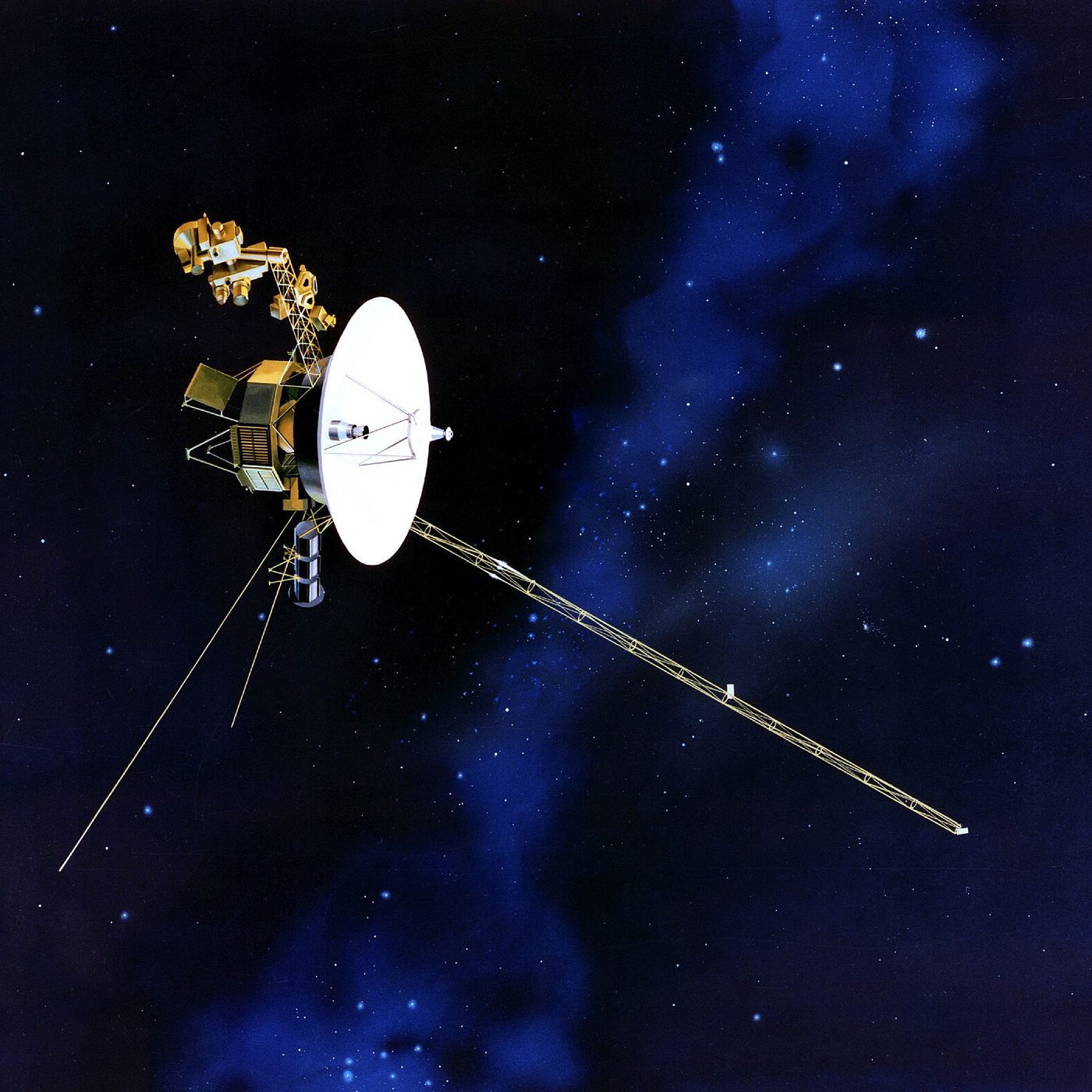
NASA's Voyager 1 is about to become the first human-made object to be one light-day from Earth. On Wednesday, the probe will be more than 16 billion miles away, so its radio signals will need 24 hours to reach Earth. The spacecraft launched in 1977 and reached what NASA defines as interstellar space, the region between star systems, in 2012.
NASA expects it to take another 18,000 years to cover a full light-year, and more than double that to come near another star. Its twin, Voyager 2, will not reach one light-day until 2035. After sunset Tuesday, NASA wants people to use phones or flashlights to signal V-G-R, the probe's call sign, in Morse code.
Both probes still send back data on the magnetic field, pressure, dust and cosmic rays. About once a week, a small flight team at NASA's Jet Propulsion Laboratory in Pasadena, California, sends commands to the spacecraft. In September, controllers finished the latest power-saving effort, and in October they briefly lost contact with Voyager 1.
They are still trying to learn why. Project manager Suzanne Dodd calls the probe "a national treasure."
- more than 16 billion miles, 26 billion kilometersVoyager 1's distance from Earth at one light-dayThe Boston Globe
- 18,000 yearstime NASA expects Voyager 1 to need to reach a full light-yearThe Boston Globe
- 2035year Voyager 2 reaches one light-dayThe Boston Globe
Three sides of the story
18 news outlets reported this
Tap a color or swipe sideways to switch sides.
Liberal8 outlets
A record-setting probe and its human legacy
The Boston Globe runs the same text as the Christian Science Monitor, headlined "closes in on a light-day in interstellar space." It stresses the "mind-blowing distance" and leans on Suzanne Dodd, who calls the probe a "national treasure" and compares it to "the little engine that could." It adds Carl Sagan's Pale Blue Dot remarks, the Golden Record and the call to flash V-G-R in Morse code.
Al Jazeera English opens with NASA's announcement and gives the probe's speed as roughly 36,000 miles per hour. It notes the October loss of contact, which the team has not yet figured out, and quotes Bill Nye of the Planetary Society: "All of us — everyone on Earth — have been touched." NPR's report, titled "Far from home," calls Voyager 1 the furthest man-made object and says it will be roughly 16 billion miles from Earth on Wednesday.
Center7 outlets
A milestone for Earth's farthest ambassador
The Christian Science Monitor runs the same text as The Boston Globe, headlined "closes in on a light-day in interstellar space for a new distance record." Its subhead says the spacecraft and its twin have "visited planets, captured images, and kept sailing." The opening paragraph says Voyager 1 is about to become "humanity's first object" to reach one light-day, and the report explains that radio signals will then need 24 hours to arrive.
It quotes project manager Suzanne Dodd, who calls the probe "a national treasure" and describes the Golden Record as a time capsule of 1977. It also gives Carl Sagan's words on the Pale Blue Dot and a statement from Bill Nye of the Planetary Society. The report describes the weekly commands from the Jet Propulsion Laboratory and the October loss of contact that controllers are still trying to figure out, and it gives the probe's speed as 38,000 mph.
- Christian Science Monitor: NASA's Voyager 1 closes in on a light-day in interstellar space for a new distance record
Conservative3 outlets
Outlets on this side gave the story little coverage.
Which side made the stronger case?
We will email you when the story continues. At most one email a day.
- Voyager 1's speed
- The Boston Globe, Christian Science Monitor: 38,000 mph
- Al Jazeera English: roughly 36,000 mph
All sources: 28 articles from 18 outlets
Liberal (14)
- ABC News: WATCH: NASA's Voyager 1 now a light-day away after 1977 launch
- ABC News: WATCH: NASA’s Voyager 1 reaches major milestone
- Al Jazeera English: NASA’s Voyager 1 hits record one light-day distance, 50 years after launch
- Al Jazeera English: Voyager 1 reaches one light-day from Earth after 49 years in space
- Al Jazeera English: NASA’s Voyager 1 to hit new space distance record of one light-day
- CBS News: Voyager 1 sets distance record of 1 "light day" from Earth
- Los Angeles Times: NASA's Voyager 1 will soon be so far away that its messages take a day to reach Earth
- NPR: Far from home. Voyager 1 is now farther than anything man has sent into space
- The Boston Globe: After 49 years, Voyager 1 is a mind-blowing one light-day from Earth
- The Boston Globe: ‘Very moving’: BU astronomy professor working on Voyager program says ‘light-day,’ milestone enables next generation of research
- The Boston Globe: NASA’s Voyager 1 closes in on a light-day in interstellar space for a new distance record
- The Guardian: After 49 years, Nasa’s Voyager 1 is one light-day away from us. Can we save this ‘pale blue dot’? |
- Yahoo News: Voyager 1 phones home from a light-day away for the 1st time in space history
- Yahoo News: Voyager 1 phones home from a light-day away for the 1st time in space history
Center (10)
- Christian Science Monitor: NASA's Voyager 1 closes in on a light-day in interstellar space for a new distance record
- Courthouse News: NASA’s Voyager 1 phones home from an awe-inspiring one light-day away
- Courthouse News: NASA’s Voyager 1 closes in on a light-day in interstellar space for a new distance record
- Deutsche Welle: NASA's Voyager 1 reaches a light-day away from Earth
- NewsNation: NASA's Voyager 1 now one light-day from Earth
- Newsweek: NASA Reveals What Happens When Voyager 1 Reaches Historic Distance
- Newsweek: NASA Voyager 1 To Pass 'Extraordinary' Distance From Earth: How It Compares
- The Seattle Times: NASA’s Voyager 1 phones home from an awe-inspiring one light-day away
- The Seattle Times: NASA’s Voyager 1 closes in on a light-day in interstellar space for a new distance record
- UPI: NASA’s Voyager 1 has reached 1 light‑day from Earth, the first human‑made object in space to reach that distance
Conservative (4)
- New York Post: NASA Voyager 1 probe believed to have accomplished ‘astounding feat’ in reaching milestone
- RedState: Voyager 1 Just Hit a Distance So Big It Takes Light a Whole Day to Catch Up
- The Epoch Times: NASA Provides Voyager 1 and 2 Mission Updates From Interstellar Space
- The Epoch Times: Voyager 1 Becomes Humanity’s First Spacecraft to Travel One Light-Day
The evening briefing by email
One email a day, around 8:30 p.m. New York time: the seven main stories, each with its three sides, and the blind spot of the day. Unsubscribe with one tap.
A Telegram channel is coming soon.