Supreme Court seems divided over Labor Department's power to fine farm employers
The case asks whether penalties on a New Jersey farm over migrant worker conditions can be set by agency judges instead of courts.
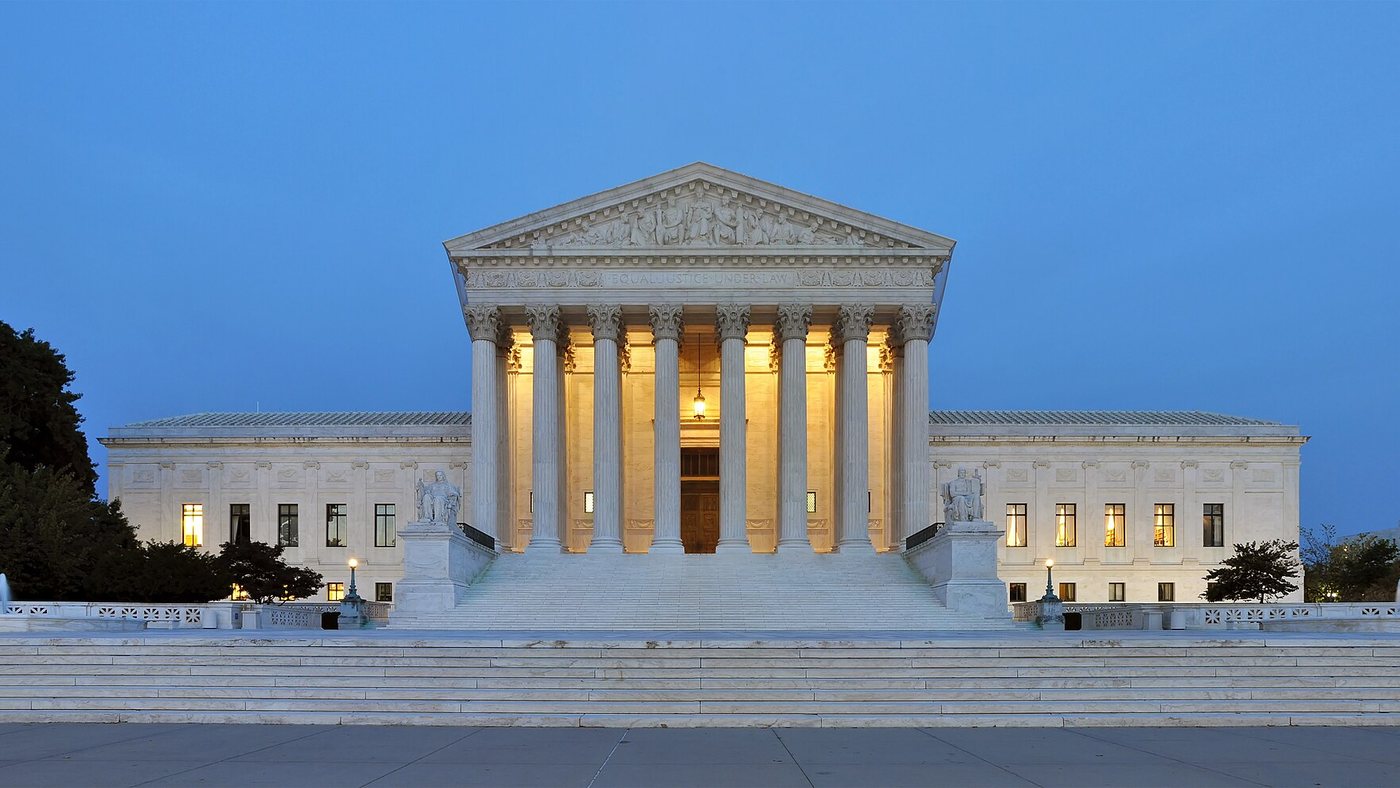
The heard arguments on Tuesday in Department of Labor v. Sun Valley Orchards. The question is whether the federal government can penalize employers who break the conditions of the H-2A program, which lets U.S. employers bring in foreign workers for temporary farm jobs, through its own agency proceedings instead of in federal court.
Sun Valley Orchards, a New Jersey farm, got permission for 96 H-2A workers in 2015. The Labor Department found it violated program requirements on working and living conditions. The Washington Examiner reports the department ordered $211,800 in civil penalties and $344,945.80 in back wages.
An ruled the case had to go through the federal judiciary, citing the Supreme Court's 2024 decision in v. Jarkesy. Sarah Harris, principal deputy , argued for the government that H-2A is a government-granted privilege tied to immigration power.
She said bringing federal court cases for hundreds of violations each year is not possible. Robert Johnson, the farm's lawyer, argued the dispute is a contract matter for federal court. The justices appeared split.
In rebuttal, Harris said agency penalties followed by fresh review in federal court would be the least bad outcome. The Washington Examiner reports a ruling is expected as soon as early 2027 and by the end of June 2027 at the latest.
- 96H-2A visas Sun Valley Orchards got permission for in 2015Courthouse News
- $211,800civil penalties ordered by the Labor Department, per the Washington ExaminerWashington Examiner
- $344,945.80back wages ordered, per the Washington ExaminerWashington Examiner
- more than $550,000fee challenged, per The Center SquareThe Center Square
Three sides of the story
7 news outlets reported this · Little coverage from liberal outlets
Tap a color or swipe sideways to switch sides.
Liberal1 outlet
Justices seem split on agency fining power
NPR's headline says the Supreme Court "seems split" over federal agencies' ability to fine for law violations. NPR reports the justices listened to arguments Tuesday over a case tied to temporary worker visas. It says the company involved holds that disputes over enforcement belong in the courts rather than with the agency alone.
Center1 outlet
Government warns of underenforcement if agency power falls
Courthouse News opens with the Trump administration having "begged" the justices to keep the Labor Department's ability to penalize employers who mistreat H-2A farmworkers. The report centers on Sarah Harris, who warned that bringing federal court cases for hundreds of violations each year is not possible and that a loss could reach and federal student loans. "Please reverse," she told the justices.
It describes the farm's conditions, including workers housed in six bedrooms with 20 bunk beds apiece and given prefilled departure forms. On the bench, it says most conservative justices seemed opposed to Harris in the first half, with Roberts and Gorsuch questioning the reach of executive power. Johnson, the farm's lawyer, then appeared to swing even more justices toward the government, and Kavanaugh called his proposal "at war with clarity."
The three liberal justices seemed broadly opposed to the farm from the start. Harris closed by calling agency penalties with later court review the "least bad" option.
Conservative5 outlets
Split justices and tough questions on immigration's role
The Washington Examiner says the court "grappled" with the case, that the justices appeared split and that neither side strongly won them over. It quotes Kagan calling the case "a kind of visa fraud or immigration fraud." The Daily Caller's headline says justices "Bash" the lawyer defending the farm.
Its report follows Kavanaugh and Barrett pressing Johnson for a yes or no answer, with Kagan and Sotomayor explaining why immigration precedent applies. The Center Square also reports a divided court. It quotes Thomas telling Harris "You can't rely on immigration as a basis for this," says Roberts and Barrett seemed cautious about broad executive power, and notes the farm later went out of business after the fine.
The Washington Times reports the warned the whole system of federal administrative fines could topple if the Labor Department loses. The Examiner adds that a ruling could come as soon as early 2027.
- Washington Examiner: Supreme Court grapples with Labor Department case involving migrant worker fines
- Daily Caller: Supreme Court Justices Bash Lawyer Defending Company Undercutting American Jobs With Cheap Migrant Labor
- The Center Square: U.S. Supreme Court appears split on migrant labor dispute
- The Washington Times: Supreme Court to decide if federal agency can impose fines without going to court
Which side made the stronger case?
We will email you when the story continues. At most one email a day.
All sources: 9 articles from 7 outlets
Liberal (1)
Center (1)
Conservative (7)
- Daily Caller: Supreme Court Justices Bash Lawyer Defending Company Undercutting American Jobs With Cheap Migrant Labor
- The Center Square: U.S. Supreme Court appears split on migrant labor dispute
- The Epoch Times: Supreme Court Hears Challenge to Labor Department’s In-House Fines
- The Epoch Times: Supreme Court Hears Case Challenging Labor Department’s Authority to Impose Penalties on Farms
- The Epoch Times: Supreme Court to Hear Case on Agency Power to Penalize Farms That Violate Worker Conditions
- The Washington Times: Supreme Court to decide if federal agency can impose fines without going to court
- Washington Examiner: Supreme Court grapples with Labor Department case involving migrant worker fines
The evening briefing by email
One email a day, around 8:30 p.m. New York time: the seven main stories, each with its three sides, and the blind spot of the day. Unsubscribe with one tap.
A Telegram channel is coming soon.