Trump questions if midterms were honest after saying he would accept results
His Monday Truth Social post offers no specific evidence, and state and local officials say voting went mostly problem-free.
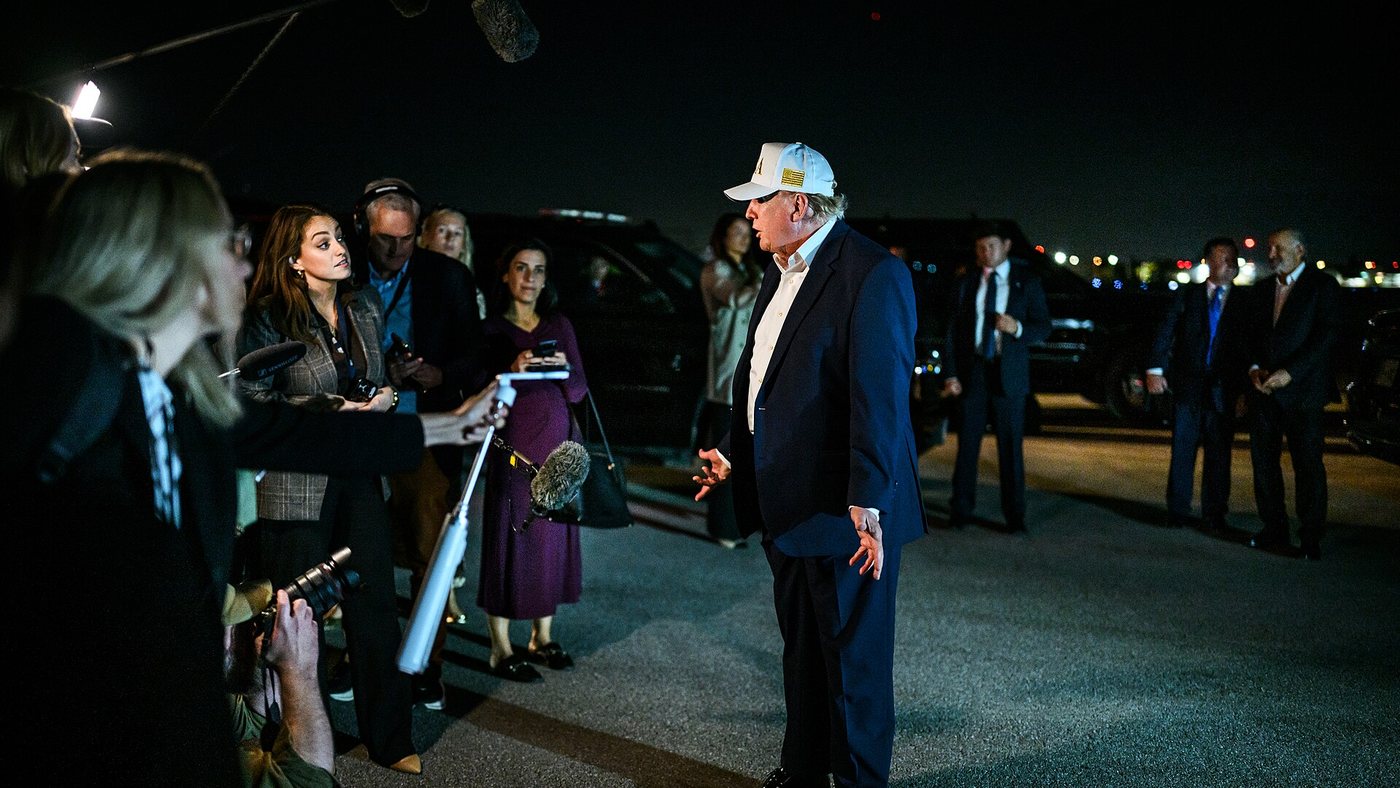
President Donald Trump questioned the honesty of the elections in a Truth Social post on Monday. "Does anybody really believe that this 'Election' was honest," he wrote, and asked how the polls could be "so wrong." He added that some "dumps" were so large that winning was impossible and that "it's all about the machines."
The post gave no specific evidence of error or wrongdoing. Democrats won control of both and the in the midterm elections. They have at least 54 Senate seats, and counting continues in some races, including Senate contests in Alaska and Mississippi.
On election night Trump told the New York Times he was "absolutely willing" to accept the results. On Saturday he reposted posts questioning Democrats' vote totals, Newsweek reported, though in the posts it saw he did not call the results fraudulent. State and local officials across the country said voting had been mostly problem-free.
Charles Stewart III, an MIT political scientist, said vote reporting on election night followed standard patterns. Stephen Miller, who replaces Susie Wiles, started Monday as White House chief of staff.
- 54 US Senate seatswon by Democrats so far, by the BBC's countBBC News
- more than 40 Republican-held House seatsflipped by Democrats, according to NewsweekNewsweek
Three sides of the story
22 news outlets reported this · Little coverage from conservative outlets
Tap a color or swipe sideways to switch sides.
Liberal12 outlets
Trump's reversal from accepting results to crying fraud
The Independent opens with Trump reversing course and quotes his line that "it's all about the machines." It notes he congratulated Democrats on election night and made no fraud claims in his appearances since, and it quotes former Trump press secretary Sean Spicer's remark about four days with "no protests, riots and vandalism." Time says Trump "casts doubt" on the results, notes the post "did not elaborate," then reviews his 2020 history, including 62 lawsuits counted by the House Jan. 6 committee.
The New Republic calls the claims "muddled," says it was unclear which polls Trump meant, and points to warnings of Republican losses from his own pollster, Tony Fabrizio. The Daily Beast headlines a "Deranged U-Turn," says Trump "baselessly" questioned the results, and adds his weekend reposts and his July Oval Office claims about .
- The Independent: Trump changes course and questions if election was ‘honest’
- Time: Trump Casts Doubt on Midterm Election Results
- The New Republic: Trump Finally Emerges From Election Loss Stupor to Cry Fraud
- The Daily Beast: Sore Loser Trump Makes Deranged U-Turn on Election Results
Center7 outlets
Vague claims versus officials describing smooth voting
The BBC leads with the post and says Trump gave no specific evidence of what he was referring to. It quotes MIT's Charles Stewart III that vote reporting followed "standard patterns," and Harvard's Ruth Greenwood, who says slow counts do not mean "anything nefarious is occurring." It adds that state and local officials reported mostly problem-free voting and that Trump has acknowledged the Iran war contributed to the defeat.
Newsweek, in a piece on Trump's Saturday reposts, describes a post calling Gina Hinojosa's Texas totals "Looney Tunes numbers." It says Trump had not called the results fraudulent in the posts it saw and that neither post offered evidence. The Hill reports that Trump asked how the polls could be "so wrong" after signaling he would accept the results.
Forbes headlines that Trump "suggests he won't accept" the wins and "baselessly" questions their honesty.
- BBC News: Trump questions midterm elections integrity after previously accepting results
- Newsweek: Trump Shares Posts Questioning Midterm Election Results
- The Hill: Trump casts doubt on midterm results: ‘How could the polls be so wrong?’
- Forbes: Trump Suggests He Won’t Accept Democrats’ Midterms Wins—Baselessly Questions ‘Honesty’ Of The Results
Conservative3 outlets
Outlets on this side gave the story little coverage.
Which side made the stronger case?
We will email you when the story continues. At most one email a day.
All sources: 30 articles from 22 outlets
Liberal (16)
- HuffPost: MS NOW Host Highlights Trump's 'Half-Assed Attempt' To Deny Crushing Midterms Results
- HuffPost: Trump Can't Seem To Decide Whether He's Accepted The Midterm Results
- Los Angeles Times: In search of post-midterm message, Trump waffles on trusting election, immigration policy
- Mother Jones: Trump Is Claiming Voter Fraud. Will the MAGA Power Structure Join In?
- NBC News: Trump casts doubt on election results after saying he was ‘absolutely willing’ to accept them
- NPR: After midterm losses, Trump makes changes to his inner circle
- NPR: Trump staffing changes post-midterms signal he's battle ready
- The Daily Beast: MAGA Podcast Bros Go Cold on ‘Effeminate’ Trump
- The Daily Beast: Kimmel Predicts Dark End for Trump’s Sudden Election Denial
- The Daily Beast: Sore Loser Trump Makes Deranged U-Turn on Election Results
- The Guardian: The Guardian view on Maga after the midterms: doubling down on Trumpism | Editorial
- The Independent: Trump changes course and questions if election was ‘honest’
- The New Republic: Trump Finally Emerges From Election Loss Stupor to Cry Fraud
- The Philadelphia Inquirer: Trump veers back into claims of rigged election for midterms
- Time: Trump Casts Doubt on Midterm Election Results
Center (11)
- BBC News: Trump questions midterm elections integrity after previously accepting results
- Deutsche Welle: Japan watches for signs of change in Trump's foreign policy priorities
- Forbes: Trump Starts Sowing Doubt In Midterms Results—But Experts Say He Can’t Do Anything To Change Them
- Forbes: Trump Suggests He Won’t Accept Democrats’ Midterms Wins—Baselessly Questions ‘Honesty’ Of The Results
- Forbes: Trump Amplifies Midterm Election Conspiracies—After Previously Saying He Would Accept Results
- NewsNation: Trump questions integrity of midterm elections in backflip
- Newsweek: Trump Shares Posts Questioning Midterm Election Results
- The Hill: Trump baselessly casts doubt on midterm election results (opinion)
- The Hill: The Memo: Trump’s mixed signals give way to a doubling down after midterms defeat
- The Hill: Trump casts doubt on midterm results: ‘How could the polls be so wrong?’
- The Seattle Times: Trump veers back into claims of rigged election
Conservative (3)
The evening briefing by email
One email a day, around 8:30 p.m. New York time: the seven main stories, each with its three sides, and the blind spot of the day. Unsubscribe with one tap.
A Telegram channel is coming soon.