G7 foreign ministers meet in Paris as Rubio faces questions on Ukraine and Iran
Rubio's first trip abroad since the midterms comes as allies press for a place in Ukraine talks and seek to avoid escalation with Iran.
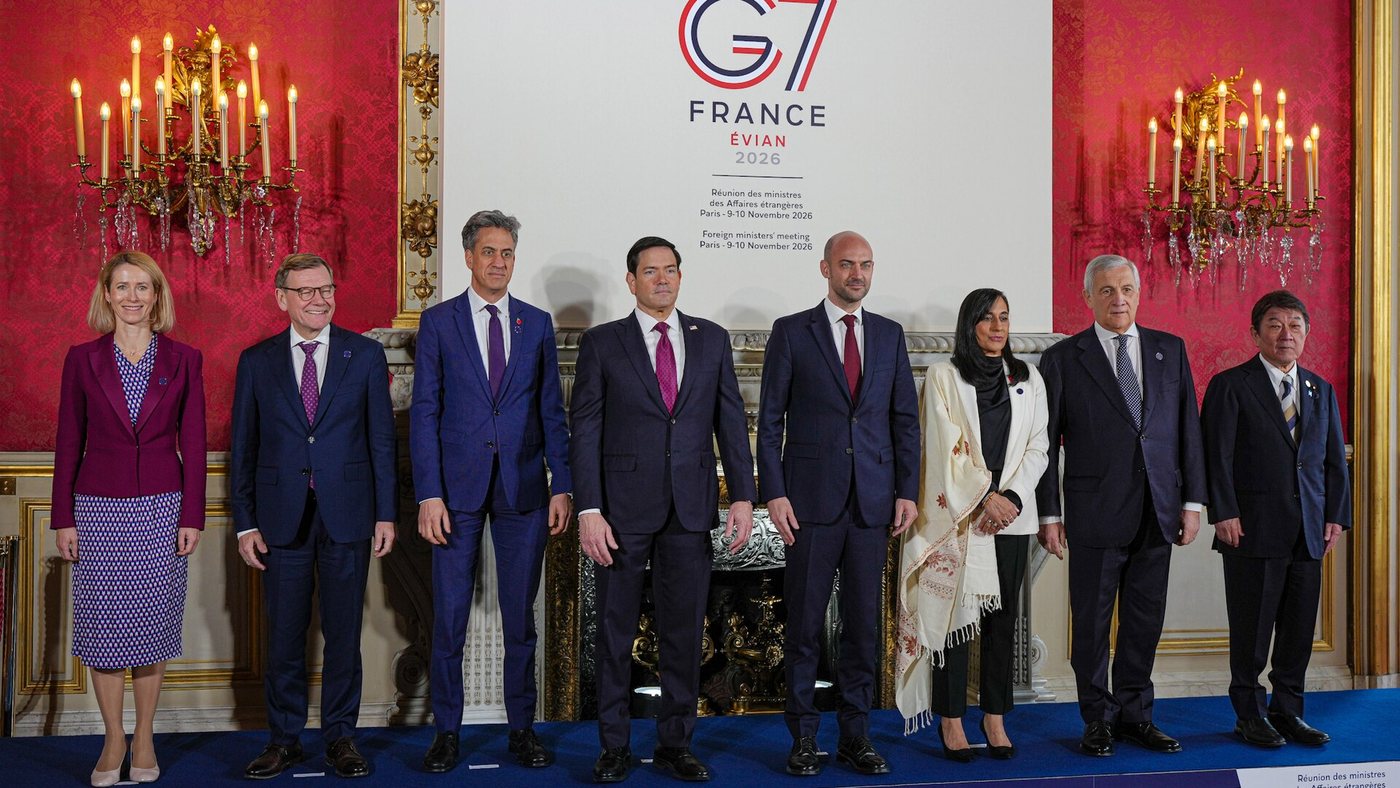
Foreign ministers from the Group of Seven countries began two days of talks in Paris on Monday. The US, Britain, Canada, France, Germany, Italy and Japan are taking part. It is Secretary of State Marco Rubio's first overseas trip since the midterm elections, in which Republicans lost control of Congress.
Ukraine, Iran, energy and artificial intelligence are among the topics. US envoys Steve Witkoff and Jared Kushner are set to meet Ukrainian and Russian officials in Abu Dhabi. Rubio said some progress has been achieved on security arrangements after the war for Ukraine and the remainder of Europe, but nothing has been settled yet.
German Foreign Minister Johann Wadephul said Europe must have a place at the table. On Iran, Qatari and other mediators have proposed an interim solution. Rubio said the parties are not near a breakthrough, and he described Iran's demands as unacceptable, in some instances even "outrageous."
France has signaled there will be no joint communique. Canada announced new on Russia on the sidelines, adding 38 entities and 24 individuals to its list.
- 38 entities and 24 individualsadded to Canada's Russia sanctions listCourthouse News
- over 3,500targets on Canada's Russia sanctions listCourthouse News
Three sides of the story
6 news outlets reported this
Tap a color or swipe sideways to switch sides.
Liberal3 outlets
US approach after midterm losses, with allies' questions
HuffPost runs the AP report headlined "G7 Talks In Paris Tackle Unresolved Global Crises With Questions Over U.S. Approach," and The Boston Globe runs an AP version titled "Rubio will discuss Iran, Ukraine, AI and more with G7 allies in France." Both frame the talks around how Trump will approach foreign policy after his party's heavy midterm losses, which they say came partly from unpopular policies such as the Iran war. They note little sign that Democratic gains will change Trump's strategy and that Stephen Miller is now chief of staff.
Rubio tells reporters that the allies he is meeting have also known divisions in their own systems. HuffPost adds Canadian Foreign Minister Anita Anand saying the U.S. approach is "very much a question," and German Foreign Minister Johann Wadephul saying "Europe belongs at this table." Both report Rubio saying diplomacy with Iran "hasn't been very productive," and both describe the administration's push to dismantle the International Criminal Court.
Center2 outlets
Europe presses Rubio on Ukraine settlement and Iran
Courthouse News, running AFP, leads with European ministers set to press Rubio to keep any Ukraine settlement fair to Ukraine and avoid new escalation with Iran. It quotes Wadephul: "We certainly cannot afford any military escalation at this point." It reports Trump's CNN remark that renewed fighting is "highly unlikely," and Canada's new Russia sanctions.
It also notes the venue moved from Marseille to Paris, and French Foreign Minister Jean-Noel Barrot's slip of saying "Welcome to Marseille." The Seattle Times runs the AP report on US approach after the midterms. It quotes Rubio on allies' questions and Wadephul's statement that Europe needs "simply the restoration of the existing security architecture."
It adds that France signaled no joint communique.
- Courthouse News: G7 ministers press Rubio on Iran, Ukraine at Paris talks
- The Seattle Times: G7 talks in Paris to focus on unresolved global crises with questions over US approach
Conservative1 outlet
G7 ministers gather in Paris amid crises
The Washington Times reports that foreign ministers from G7 countries in Europe, Asia and North America gathered in Paris on Monday for two days of talks. Its headline ties the meeting to continuing crises in Ukraine and Iran.
Which side made the stronger case?
We will email you when the story continues. At most one email a day.
All sources: 8 articles from 6 outlets
Liberal (4)
- ABC News: G7 attention turns to Ukraine while US-mediated talks get underway in Abu Dhabi
- ABC News: Rubio will discuss Iran, Ukraine, AI and more with G7 allies in France
- HuffPost: G7 Talks In Paris Tackle Unresolved Global Crises With Questions Over U.S. Approach
- The Boston Globe: Rubio will discuss Iran, Ukraine, AI and more with G7 allies in France
Center (3)
- Courthouse News: G7 ministers press Rubio on Iran, Ukraine at Paris talks
- The Seattle Times: G7 attention in Paris turns to Ukraine while US-mediated talks get underway in Abu Dhabi
- The Seattle Times: G7 talks in Paris to focus on unresolved global crises with questions over US approach
Conservative (1)
The evening briefing by email
One email a day, around 8:30 p.m. New York time: the seven main stories, each with its three sides, and the blind spot of the day. Unsubscribe with one tap.
A Telegram channel is coming soon.