Democrats win the House as two Senate races stay too close to call
Slate counts 237 House seats for Democrats with a few dozen races uncalled, and Newsweek reports Democrats flipped legislative chambers in several states.
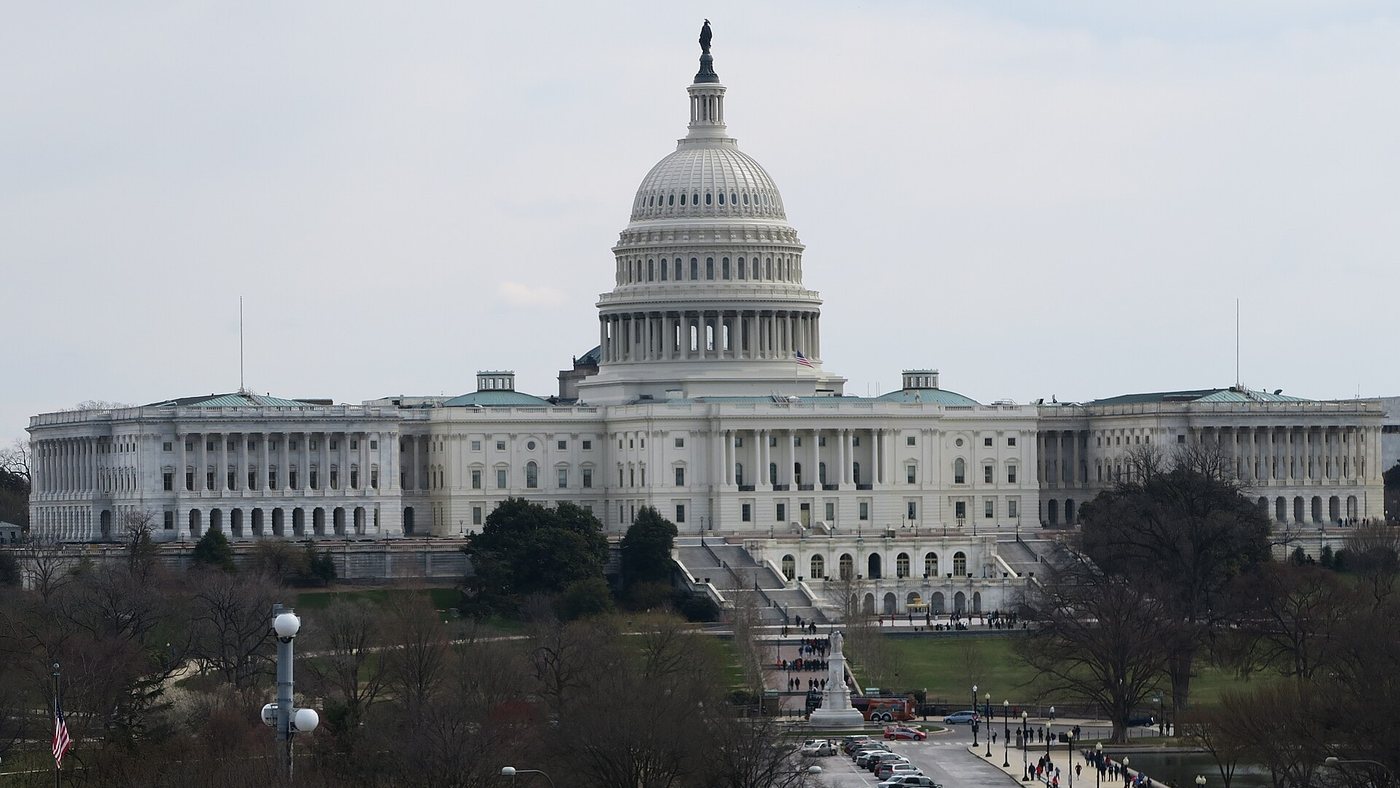
Americans voted in elections on Tuesday, with control of for the rest of President Trump's term at stake. Slate reports that Democrats have officially won 237 House seats, and a few dozen House races have not been called. In the , the contests in Alaska and Mississippi are still undecided.
In Mississippi, Democrat Scott Colom, a , was ahead of Republican Sen. Cindy Hyde-Smith by 65 votes, by Slate's count. In Alaska, the Associated Press showed Democrat Mary Peltola and Republican Sen. Dan Sullivan virtually tied, with part of the expected vote still out. If no candidate wins a majority there, a count would follow.
Slate also reports that Republican Sen. Susan Collins lost in Maine. Newsweek reports Democrats flipped both legislative chambers in Wisconsin and took the Texas House, though not all results were final, and Republicans still appear to hold the Texas Senate. In Washington state, The Center Square reports House Democrats are on track to widen their lead if election night leads hold, while the party would not gain a supermajority in the state Senate.
- 237 House seats Democrats have officially won, by Slate's account — Slate
- 65 votes Colom's lead over Hyde-Smith in Mississippi, by Slate's count — Slate
- about three-quarters share of the expected Alaska vote counted, per the AP as Slate cites it — Slate
- 59-39 to 66-32 Washington House Democrats' lead if election night leads hold, per The Center Square — The Center Square
Three sides of the story
Liberal5 outlets
a blue tsunami and the races still undecided
Slate says "a blue tsunami has swamped America" and walks through what is still uncounted: Alaska, where Mary Peltola and Sen. Dan Sullivan are virtually tied, Mississippi, where Scott Colom led Sen. Cindy Hyde-Smith by 65 votes, and House races in Colorado, Arizona, Florida, North Carolina and Maine. It also points to historic firsts among new senators and to Susan Collins' defeat in Maine. The Los Angeles Times, in an election-day guide, cites polling that put Democrats ahead on the generic ballot by 7 to 11 points, and asks which bellwether districts, such as Kentucky's 6th, could signal a wave.
The Daily Beast, in a pre-election piece, reports that Daily Show star Jordan Klepper is concerned about 's reaction and thinks "projections of a blue wave are probably overstated." NPR's Ailsa Chang interviews Wendy Davis, a Democrat and former Texas state senator, on what Texas turning blue could mean for later elections.
Center1 outlet
Democratic gains in statehouses and their national reach
Newsweek leads with Democrats' victories reaching past the U.S. Capitol into state legislatures. It reports Wisconsin flipped both chambers and kept a Democratic governor, producing the state's first unified Democratic government in 16 years, and that Democrats gained control of five state governments. Political scientist Boris Shor calls Texas the most dramatic case: Democrats won the governor's office for the first time since 1990 and took the state House, while Republicans still appear to hold the Senate.
Thad Kousser of the University of California San Diego says Democrats have "this huge mandate" in Washington but face obstacles. Shor expects gridlock in Congress because of a presidential veto. Newsweek also quotes Steven Rogers on state influence over education spending and roads, and on the National Popular Vote compact, and the Democratic Legislative Campaign Committee's Heather Williams, who calls 2026 one of the greatest landscape shifts in American history.
It notes results were not all final.
Conservative1 outlet
Washington Republicans' losses and Democrats' growing legislative majorities
The Center Square opens with Washington State Republican Party Chairman Jim Walsh calling the results "Bad, but not disastrous," and goes race by race through the legislature. Rep. Brian Burnett of Wenatchee trails Democrat Stacy Willoughby by just over 1,400 votes but expects the numbers to change. Burnett says a Democratic supermajority could "override the veto from the governor."
The outlet reports House Democrats would grow their lead from 59-39 to 66-32 if election night leads hold, while the Senate would not reach a supermajority. Democratic Chair Shasti Conrad calls it "one of the best election nights in my lifetime." Rep. Travis Couture, who leads narrowly in the 35th District, says Republicans in Washington must take responsibility for the losses and reflect on the party's future.
- The Center Square: Washington Democrats move closer to supermajority after bad night for GOP
Which side made the stronger case?
Steven Rogers of Saint Louis University told Newsweek that states handle most education spending and shape transportation, including roads. Political scientist Boris Shor said a party that holds the governor's office and both chambers can more easily pass budgets and change , K-12 funding, housing and zoning policy. In Wisconsin, he said, expanding Medicaid is now "realistically on the table." Thad Kousser said new Democratic legislatures will likely focus on cost of living, housing and health care.
All sources: 8 articles from 7 outlets
Liberal (6)
- Los Angeles Times: Which races might predict a 'blue wave'? Here's what to watch
- NPR: What's the future of the Democratic party in Texas, amid historic midterm wins?
- NPR: Republican Rep. Don Bacon on what a potential blue wave could mean for the GOP
- Slate: Democrats’ Blue Wave Could Get Even Bigger
- The Boston Globe: The red walls have fallen, even in Texas (opinion)
- The Daily Beast: ‘Daily Show’ Stars Predict Nightmare Morning After Blue Wave
Center (1)
Conservative (1)
- The Center Square: Washington Democrats move closer to supermajority after bad night for GOP
The morning edition by email
One email a day: the three main stories, each with its three sides. No ads. Unsubscribe with one tap.
A Telegram channel is coming soon.